
Why Energy Is a Leadership Strategy, Not a Wellness Trend
May 22, 2026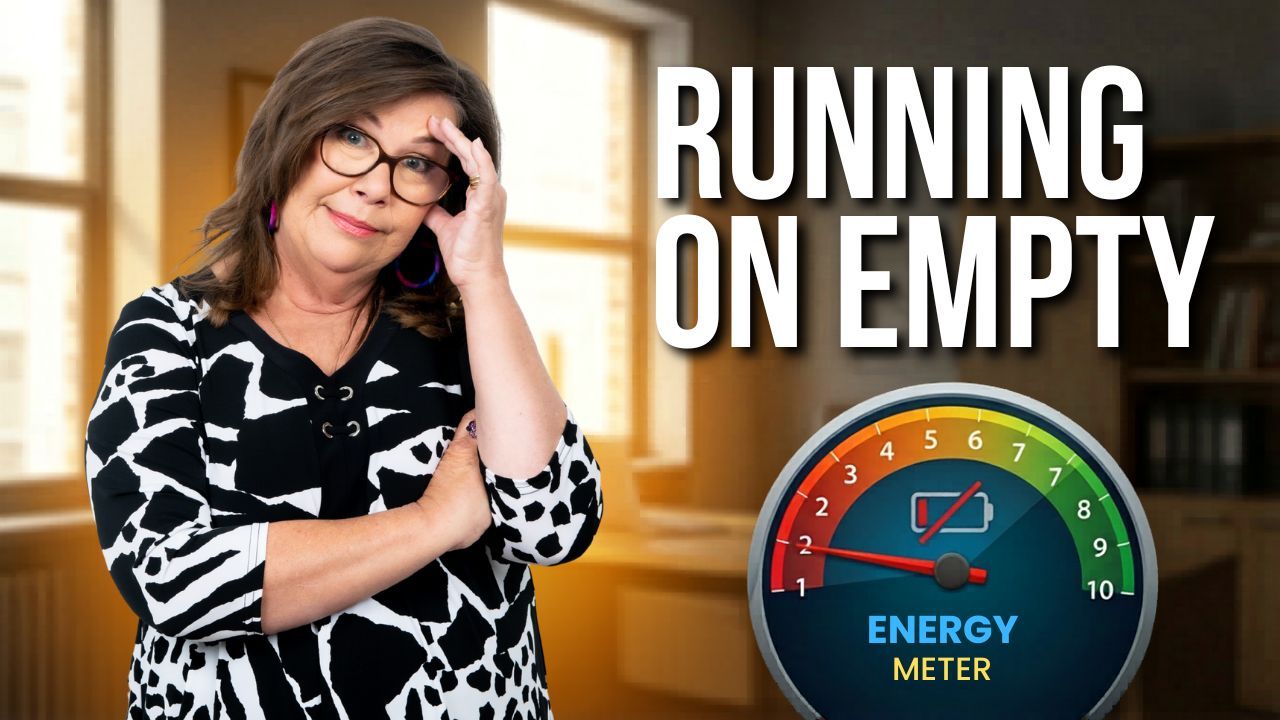
This week, I want to challenge the way most hospitality leaders think about energy.
Not because it’s unimportant. Quite the opposite in fact. It’s so important that we can’t afford to keep treating it as a personal care matter; something you sort out in your own time, with your own resources, as a side project alongside the real work of running a venue.
Energy is the real work. And managing it (both your own and your team's) is one of the most consequential leadership decisions you’ll make this year.
I had this conversation recently with Rich Ellis, The Energy Coach, on The Michelle Pascoe Hospitality Podcast. Rich has spent nearly two decades working with leaders and teams on sustainable performance. And what he said early in our conversation is so important: you can drag yourself through a day at two out of ten, or you can show up at nine or ten. And, more often than we care to admit, that’s a daily choice.
Not always of course. There are genuine circumstances that knock a leader flat. But for most of us, most of the time, the gap between a two-out-of-ten day and a nine-out-of-ten day comes down to a handful of small, neglected decisions made before we even walk through the door.
Your energy sets the temperature of the room
In hospitality, everything that happens on the floor flows through leadership. The standards, yes. The systems, yes. But also the mood, the pace, and the psychological safety of the team.
When you show up depleted, your team feels it before you say a word. The dropped energy in the room, the shortened responses, the slight edge in your tone during a busy service. All these things register. Not consciously, perhaps. But they do register.
Rich made a point that I think every manager and CEO in this industry needs to here: the leaders who retain great people and build strong cultures aren’t necessarily the most technically skilled. They’re the ones who show up consistently. Who their teams can read and rely on. Whose presence is a stabilising force rather than an unpredictable variable.
That kind of consistent presence is a valuable energy practice.
The signals most leaders miss
One of the most valuable parts of my conversation with Rich was on early burnout signals. Not in yourself, but in your team.
Because by the time someone tells you they’re struggling, you’ve usually missed three or four earlier indicators. Dropped shoulders. The extra coffee by mid-morning when someone is normally a one-coffee person. Withdrawal from team conversation. Less eye contact. Lateness that is slightly out of character.
These aren’t dramatic warning signs, especially in a fast-paced venue environment where it’s easy to move past them without even registering what they actually mean. A leader who’s operating at a two out of ten doesn’t have the bandwidth to notice. A leader who’s managing their own energy well does.
This is why energy management is a leadership strategy. Because your capacity to lead, to actually see your people and respond to what’s in front of you, is directly tied to how you’re showing up physically and mentally.
The one tool worth implementing this week
If you take one practical thing from Rich's work and put it into your venue this week, make it the 1-to-10 check-in.
At the start of a team meeting or shift briefing, ask one question: "On a scale of one to ten, how's your energy today?" You go first and share your own number – and be honest!
That’s it.
What happens over time is worth more than the fifteen seconds it takes. Team members begin to develop a language for their own wellbeing. They start thinking ahead, “If I was a four last week, what do I need to do differently to be a six this week?” The system generates self-awareness that the leader doesn’t have to constantly drive.
And when someone says they’re at a two or a three, you don’t solve it in the room. You acknowledge it - "Thanks for being honest, let's catch up after the shift" - and you follow through. The group check-in creates safety. The one-on-one creates support.
Embracing the morning light
Rich also gave me one piece of simple personal advice that can make a huge difference to your daily energy.
Get outside within the first ten minutes of waking. Not to exercise or meditate. Just to let natural light into your eyes before you do anything else.
The science behind it involves the suprachiasmatic nucleus, your body's master clock, and the need to clear melatonin from your system so that the day starts clearly. Rich says seven to ten minutes is enough. Even on an overcast day, the light outdoors is considerably stronger than anything inside a building or through a car window.
It sets up not just the morning, but your sleep the following night. Which sets up the next morning. Which sets up how you show up for your team.
Small habit. Compound effect.
What this actually asks of leaders
Managing your energy as a leadership strategy means admitting that you can’t be effective at a two out of ten. It means taking breaks not because you’ve earned them, but because your team needs you functional. It means modelling what sustainable performance looks like, so that the people in your pipeline don’t look at leadership and decide it’s not worth the cost.
As Rich rightly said: it’s being a little bit selfish in order to be very unselfish.
If that reframe shifts something for you - good. Use it!
Because in the end, your energy isn’t a personal resource you manage alone. It’s the foundation on which your team's performance, your venue's culture, and your leadership pipeline all rest.
Treat it accordingly.
Listen to the full conversation with Rich Ellis, The Energy Coach, on The Michelle Pascoe Hospitality Podcast: https://youtu.be/hPC7MD6zsk8
