
What I've Learned from 30 Years of Watching CEOs Lead
Jul 24, 2026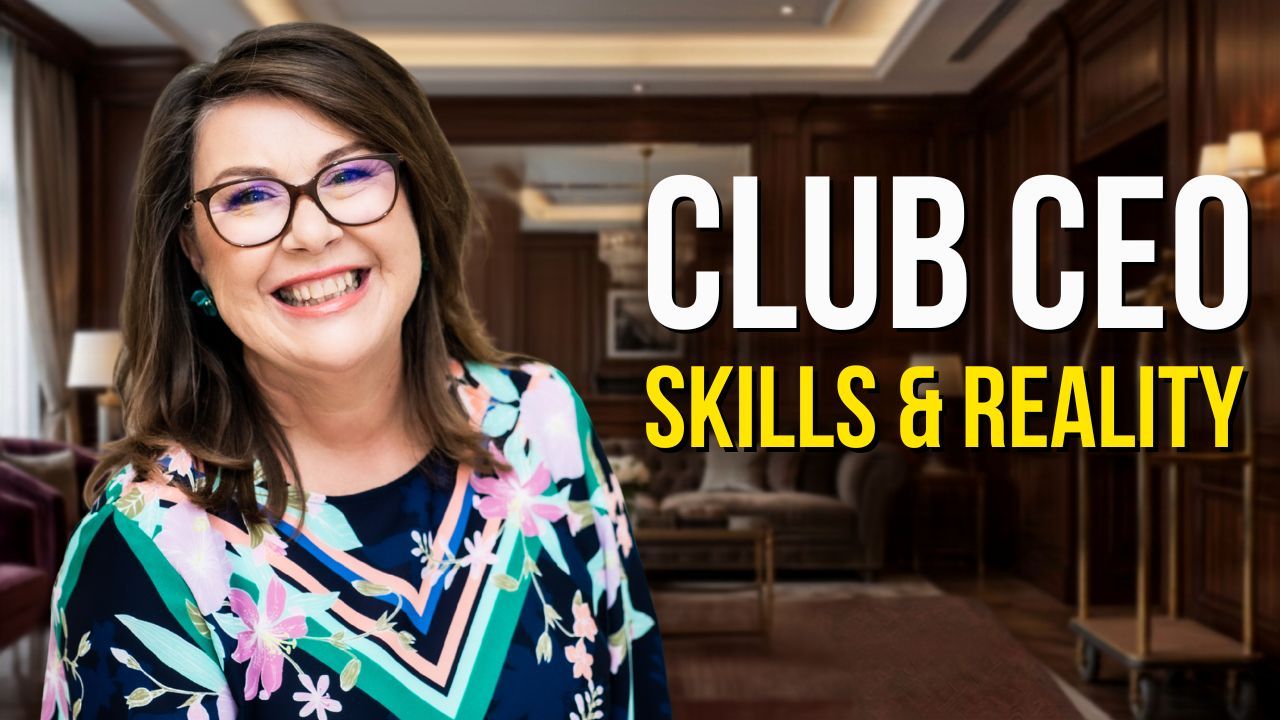
In thirty years of working alongside hospitality venues, I've come across a particular kind of CEO a handful of times. Not very enough, but often enough to know they exist, and to understand exactly what makes them different from everyone else in the room.
They're not always the most polished or the ones who present best to a board, or who have the most impressive CV. But when you spend time in their venues, something is different. The staff engage differently and there's a confidence about the place. Problems get handled at the level they should be handled at, rather than escalating upward constantly. And members feel it, even if they couldn't tell you exactly why.
What those CEOs have in common, in my experience, is that they've made a very deliberate decision about what their job actually is.
I got to sit down with one of them recently. Lewis Butterworth is CEO of Young Services Club, and he joined me on the podcast this week to talk about his path from bar work in Manchester to running a growing regional club. What struck me most was how clearly he'd thought through what the CEO role actually demands, and what it costs when that's not understood. It lines up with almost everything I've seen over three decades of watching people do this job well, and watching others do it poorly.
What Makes a Hospitality CEO a Custodian Rather Than an Owner?
A good club CEO is a custodian, not an owner. The club existed for decades before you arrived, and if you do the job well, it'll still be there long after you're gone. Your role is to take what's been built and move it forward without breaking what matters.
Lewis put it plainly when he talked about the Club’s previous CEO, Dean Cafe, who had served over twenty years in the role. What Lewis inherited wasn't just a financially stable venue, it was a team of people who'd stayed ten, sometimes twenty years, people who got along, communicated well, and were still growing. Dean hadn't just built a club. He'd built the people inside it, and that work, done over two decades, was what Lewis walked into.
I've heard that custodian language from more than one good CEO over the years, and it's always the same underlying idea. You might be in the chair for five years or fifteen, but the club isn't yours. Treat it like it is, and you'll end up making decisions that serve your ego instead of the organisation.
Why Doesn't Hospitality Have a Strong Middle Management Pipeline?
Because we haven't built one, and it's not for lack of people. As Lewis and I discussed, the middle management pipeline didn't collapse because of Covid, it was already thin before that. Covid just accelerated a gap that was already there.
I see this pattern in club after club, right across the country. Talented staff sitting a few rungs down who could absolutely step up, if anyone had ever had the actual conversation with them about it. Lewis's answer is to treat middle managers as spotters, the people close enough to the floor to notice who's got potential, who's got the spark, who might be washing dishes right now but has something worth developing. That's not a casual responsibility you hope happens on its own. It has to be deliberate, and it has to be resourced, with training budgets, with time, and with a manager whose job actually includes watching for it.
What's the Difference Between Managing Your Team and Developing Them?
Managing people gets the shift covered. Developing people builds their capacity to do the work better than you could do it yourself, and eventually to take on things you haven't even asked them to do yet.
I've worked with clubs where the CEO was genuinely brilliant operationally. Knew every system, knew every compliance requirement, could step into any department and do the job better than the person doing it. And the club was entirely dependent on them for it. The moment they were away, or distracted, or eventually moved on, the gaps became visible almost immediately, because the people around them had never really been developed. They'd been managed.
The CEOs who build genuinely strong clubs are doing the second thing, consistently, as a way of operating rather than a project with a start and end date. If that kind of accountability doesn't sit anywhere in your venue right now, that's worth paying attention to before it becomes a problem you can see from the members' side of the counter.
How Do You Close the Gap Between Older Managers and Younger Staff?
You stay close enough to your people to understand what would actually keep them engaged, and you have those conversations early, before they've already decided to leave.
Lewis made a point in our conversation about the gap that often sits between what older managers assume young staff want and what they actually want. His answer wasn't to lower standards or hand out participation trophies. It was to keep giving people an honest reality check about how much hard work is involved, while also staying patient enough to keep them interested through the slow early years, rather than assuming they only care about an extra two dollars an hour or knocking off on time.
I've watched this generational friction play out in boardrooms as much as on the floor. It's rarely about one generation being wrong and the other being right. It's about whether the people running the venue are actually listening, or just assuming they already know the answer because it's how things were done when they came up.
If any of this sounds familiar, it all starts with how deliberately you're developing the people underneath you. Our Middle Management Movement, Executive Leaders Movement, and Leadership Coaching programs are all built around exactly this kind of development, giving registered clubs and hospitality venues a genuine pathway to grow leaders from within rather than scrambling to replace them from outside. You can explore all three at michellepascoe.com/traininganddevelopmentprograms, or reach out to me directly to discuss what a development pathway could look like for your team.
And to catch the full conversation with Lewis Butterworth, visit the link below.
